Showing posts with label 2016 Books. Show all posts

Monday, February 20, 2017

Book of the Week: Giant Squid


Giant Squid

by Candace Fleming
Illustrated by Eric Rohmann
Published by A Neal Porter Book / Roaring Brook Press, 2016
36 pages
ISBN: 978–1–59643–599–5
Ages 6-11


Giant squids lives so deep in the ocean that few have ever been seen. Scientists have had to piece together a complete picture based on just parts of the creatures that have been found, mostly inside sperm whales caught by fisherman. Candace Fleming’s haunting narrative captures the mystery and the majesty of this amazing animal, once thought to be a sea monster. The moody realistic illustrations create a strong sense of being deep undersea, and include a stunning double-fold-out page showing a giant squid reemerging from the shadows of the murky ink it has shot to protect itself from a barracuda. An author’s note provides more information, including fascinating tidbits such as the fact that there are more photographs of Mars than of giant squid. Honor Book, 2017 Charlotte Zolotow Award ©2017 Cooperative Children’s Book Center

Wednesday, February 15, 2017

CCBC Multicultural Statistics for 2016


This post is adapted from  "Publishing in 2016: A Few Observations," an essay that will appear in the forthcoming CCBC Choices 2017 publication.

The CCBC has been documenting the number of books published by and about people of color and First/Native Nations book creators in various ways for 32 years.  For the first nine years, we only documented books by and about Africans and African Americans. Beginning in 1994, we began documenting and counting books by and about Africans and African Americans, Asian Pacifics and Asian Pacific Americans, First/Native Nations individuals, and Latinos.  (More about what we count and how we count.)


The slips designed and used by CCBC librarian Merri Lindgren for books to log and count.

Of the approximately 3,400 books we received at the CCBC in 2016, most from U.S. publishers, here’s the breakdown*:


  • 278 books had significant African or African American content
    • 71 of these were by Black authors and/or illustrators
  • 92 books were by Black authors and/or illustrators 
    • 21 of these had no visible African/African American cultural content)
      _________________________________

  • 237 books had significant Asian/Pacific or Asian/Pacific American content
    • 75 of these were by authors and/or illustrators of Asian/Pacific heritage
  • 212 bookswere by authors and/or illustrators of Asian/Pacific heritage
    • 137 of these had no visible Asian/Pacific cultural content
_________________________________ 
 
  • 55 books had significant First/Native Nations content
    • 21 of these were by First/Native Nations authors and/or illustrators
  •  22 books were by First/Native Nations authors and/or illustrators
    • 1 of these had no visible First/Native Nations content
_________________________________ 

  • 166 books had significant Latino content 
    • 58 of these were by Latino authors and/or illustrators
  • 101 books were by Latino authors and/or illustrators
    • 43 of these had no visible cultural content  
_________________________________ 


(*As always, it’s important to note that these numbers are solely a reflection of quantity--or lack thereof--and have nothing to do with quality, which, as with everything we receive, varies widely. Additionally, the number of books "by" does not refelect the number of individual book creators in each category, as a number of authors and illustrators created multiple books. Finally, the numbers will change slightly as we continue to receive a stray title or two. Check the statistics on our statistics on our web site for up-to-date numbers, including a breakdown by U.S. publishers only.)


Brown-skinned Daniel.
As part of the CCBC’s ongoing work around diversity in children’s and young adult literature, 2016 marked the start of a new project for us: a diversity analysis of the picture books we receive. We haven’t quite completed the work of looking at 2016 titles in depth (that will be a future post), but, anecdotally, we can say this: in picture books featuring humans (as opposed to animals or inanimate objects) as principle characters, the default is still to whiteness (that is, white characters). Having said that, we can also say that a definite trend is to make some main characters brown-skinned, with no identifiable culture or cultural content to the stories. While this cannot and should not be seen as a substitute for books with cultural content, it is not unwelcome when care is taken to avoid stereotypes in representation. (A future post will discuss how we evaluate these books in terms of our counts.)

It was also, thanks in part but not whole to Canadian publishers distributing in the United States, an unusually bountiful year for outstanding Native picture books, including My Heart Fills with Happiness, Leah’s Mustache Party, The Owl and the Lemming, Thunder Boy Jr., and We Are Not Alone, among others.


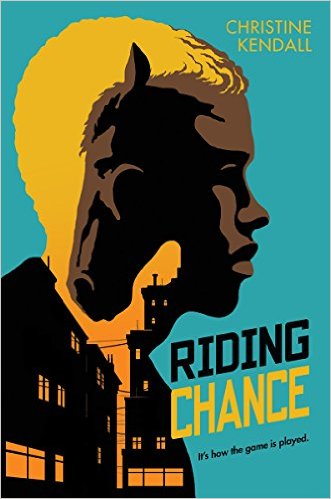
The #OwnVoices movement was one of the most important developments of 2016 for all of us who care about books for children and teens. The hashtag, coined by author and disability advocate Corinne Duyvis (On the Edge of Gone), promotes the importance of books created by cultural insiders to the identity experience they portray. It’s an idea that is both common sense and radical, and one that underscores the importance, too, of publishers seeking out new talent. Among the debuts of new authors of color we appreciated in 2016 are The Sound of Silence by Katrina Goldsaito, and Riding Chance by Christine Kendall.


Two broad categories--Asian/Pacifics and Latinos--saw a notable jump in numbers this year for both "by" and "about." The numbers for African and African Americans and First/Native Nations remained disappointingly static or dropped. Those mixed numbers reflect our mixed feelings: It’s both an both an exciting and frustrating time for multicultural literature advocates. Some of the excitement is familiar. Each and every year, there are wonderful new books. Among the many 2016 titles we’re eager to share with librarians and teachers across Wisconsin and beyond are Ghost, Makoons, Outrun the Moon, Playing for the Devil’s Fire, and many others. Some of the excitement is a direct result of social media providing wider visibility to the current era of this advocacy work, giving the voices of people of color and First/Native Nations and their allies in the world of children’s and young adult literature greater reach.


The frustration is familiar, however. It’s explained by the fact that, overall, the numbers that haven’t changed drastically in the 32 years we’ve been counting.  It’s explained by the fact that the conversations we are having now, about the importance of multicultural literature, about the importance of publishing books by authors and artists of color and First/Native Nations, about the importance of calling out racism in books for youth, still need to take place. And it’s explained by the fact that these conversations have been going on in one form or venue or another for well over 70 years.

The field of children’s and young adult literature is not removed from our society as a whole, so the fact that we are still having these conversations is, on the one hand, no surprise. But it’s also a field in which so many of us, from authors and artists to editors and publishers to librarians and teachers, believe in the power of books and reading to change the world.

We are dreamers and we are doers, and we can change the world by showing all children that they are seen, and valued, and respected, book by book. 

Monday, February 13, 2017

Book of the Week: Book Uncle and Me


Book Uncle and Me

by Uma Krishnaswami
Illustrated by Julianna Swaney
Published by Groundwood, 2016
149 pages
ISBN: 978–1–55498–808–2
Ages 7-10


Nine-year-old Yasmin visits Book Uncle’s Lending Library, located on a street corner near her apartment, every day. He calls her his Number One Patron. She usually borrows longer books, so the day Book Uncle suggests a picture book, she’s disappointed but politely accepts it. After she reads the story, about doves trapped in a hunter’s net working together to free themselves, she finds she can’t stop thinking about it. “How strange that such a skinny book can leave so many questions in my mind.” When Book Uncle is told by the city that he must shut down his library because he has no permit and can’t afford one, Yasmin is devastated. Then she’s determined. Together with her friends she draws attention to Book Uncle’s plight during the mayoral campaign, challenging the candidates to support Book Uncle and literacy, and finding out in the process that the current mayor was behind the lending library’s closure (he wanted to clean up the streets before his daughter’s marriage at a nearby fancy hotel). Engaging, child-centered, and often funny, this easy chapter book set in a large Indian city is also a primer in community activism for young children. ©2017 Cooperative Children's Book Center

Monday, February 6, 2017

Book of the Week: Watched


Watched

by Marina Budhos
Published by Wendy Lamb Books / Random House, 2016
265 pages
ISBN: 978–0–553–53418–4)
Age 13 and older

When Naeem is caught shoplifting, it further jeopardizes his already tenuous hope of graduating high school. Then he’s offered a deal by police: spy on other Muslims in New York City and he won’t be charged. In fact, they’ll pay him for information. It could even become a real job. Naeem is both enticed and repulsed by the offer. He wants to help his family, and the cops make him feel like he’s special, but he hates the idea of spying, and he hates that he doesn’t think he has a choice. When Naeem encounters Ibrahim, a boy he hasn’t seen in awhile, he realizes Ibrahim fits the officers’ “lone wolf” profile: he’s angry, isolated, and has been reading radical Islamic web sites. Naeem reluctantly reports him then becomes more and more uncomfortable as another operative steps in and further fuels Ibrahim’s anger. Isn’t this entrapment? Naeem feels trapped, too, in this taut, timely novel that addresses complex realities, from Islamophobia and police coercion to radicals who prey on Muslim youth feeling disillusioned, disconnected, and hopeless. Details of Naeem’s daily life, his worries about school, his relationship with family members, friends, and others within and beyond the diverse Muslim community, ground this riveting work in even greater poignancy and realism, while the author’s note provides background information on the truths behind this work of fiction. ©2017 Cooperative Children’s Book Center

Monday, January 30, 2017

Book of the Week: Somos como las nubes = We Are Like the Clouds


Somos como las nubes = We Are Like the Clouds

by Jorge Argueta
Illustrated by Alfonso Ruano 
Translated by Elisa Amado from the Spanish 


Published by Groundwood, 2016
32 pages
ISBN: 978–1–55498–849–5

Age 9 and older
“…the odyssey that thousands of boys, girls and young people from El Salvador, Guatemala, Honduras and Mexico undertake when they flee their countries because of extreme poverty and fear of violence” is the subject of this powerful, bilingual collection of poems. The opening, title poem compares children and their dreams to clouds. Then the voice of a child in El Salvador offers warm images of neighborhood life, followed by references to gang members and violence. “Hit this one, hit that one. / I don’t want to be this one or that / one.” The journey poems speak through and to the experiences of many children, chronicling endless walking, the frightening bestia (train), the dessert crossing. “My father says / if we keep singing, / we’ll scare away all the tiredness / and the fear / and become a song.” These migrants are individual children, each with their own names and histories and hopes and dreams, a message eloquently reinforced in “We Introduce Ourselves to the Border Patrol.” And the idea that “We Are Like the Clouds” is irony, and perhaps necessity, in the face of the unwelcoming fence at the border. The two final poems can be interpreted as a literal dream, or as safety and happiness: an arrival. Author Jorge Argueta fled from El Salvador to the United States during the war in the 1980s. His poems are set against paintings by Alfonso Ruano both realistic and symbolic. ©2017 Cooperative Children’s Book Center

Sunday, January 22, 2017

Book of the Week: A Poem for Peter


A Poem for Peter: The Story of Ezra Jack Keats and the Creation of The Snowy Day


by Andrea Davis Pinkney
Illustrated by Lou Fancher and Steve Johnson
Published by Viking, 2016
52 pages
ISBN: 978–0–425–28768–2


As a child in the 1960s, Andrea Davis Pinkney was affected profoundly by The Snowy Day. It was the first book she encountered featuring an African American child like her. Her ingenious poem is a celebration of both the character Peter and of his creator, Ezra Jack Keats. Keats started out life as a poor Jewish boy in Brooklyn who dreamed of being an artist. Peter of The Snowy Day makes several of what Pinkney describes as “peek-a-boo” appearances throughout this lyrical account of Keats’ life, “waving at the reader.” When Keats was working early in his career as a comic-book artist, for example: “The brown-sugar boy / in a blanket of white / began to ignite by what kids saw, / and didn’t see, / in the not-so-funny comics / Ezra was made to draw. / All the heroes in all the comics / were always as white as a winter sky.” This tour-de-force is illustrated brilliantly with acrylic, collage, and pencil artwork that gives a true sense of Keats’s own artwork. (KTH) ©2017 Cooperative Children’s Book Center
Wednesday, January 18, 2017

CCBC Choices 2017: The Final List!

So many great books.

We think that every year. It's why the question, "What's your favorite book this year?" is always a stumper. My personal answer, always, is "I don't have one." I'm not being coy, I'm being truthful. I don't have a single favorite. I have many books I appreciate for many different reasons.

Thinking that way informs how we create our annual best-of-the-year list, CCBC Choices. We aren't looking for a single, best book. We're looking to create a list that is broad and deep, reflective of the many dimensions of excellence to be found in literature for children and teens, many dimensions of identity in the lives of young people, and many dimensions of diversity in the world in which they--and we--live. Is it a lot of work? Yes. Is it worth it? Absolutely.

The books in CCBC Choices are titles we return to again and again in our work with preservice and practicing teachers and school and public librarians in Wisconsin.  They are books we are eager to share for many reasons: because they can engage, because they can inform, because they can entertain, because they can foster understanding and forge connections, and much more.

The Friends of the CCBC underwrite the significant cost of publishing the annual CCBC Choices booklet, which is fully annotated with age recommendations, and indexed.  The CCBC Choices 2017 booklet will be available after March 4.  If you aren't a Friends member, please consider  joining to support their work. You'll receive a copy of Choices by mail after it is published.

In the meantime, the list of titles we've chosen for inclusion in CCBC Choices 2017 is now final.

What's our favorite book this year? We don't have one. We have 246 of them. 


Monday, January 16, 2017

Book of the Week: When the Moon Was Ours

When the Moon Was Ours

by Anna-Marie McLemore

Published by Thomas Dunne Books / St. Martin's Griffin, 2016

273 pages pages

ISBN: 978-1-250-05866-9

Age 14 and older


Miel and Sam have been friends since the day Miel, drenched and scared, appeared in a field where a water tower had just been drained in Sam’s town. Miel is haunted by snippets of memory that include a curandero father long gone, and a mother and older brother who drowned--in the wind she sometimes hears her mother’s cries. But Miel has Aracely, the young woman who raised her, curer of lovesick, broken hearts, and Sam, who hangs the moon for her. Miel is one of the few who knows Sam is really Samira. He and his mother moved to town when Sam was small so he could live as a boy. The practice, from his mother’s Pakistani heritage, is called bacha posh and typically ends in adolescence. But Miel understands that it expresses who Sam is, now and forever. The Bonner Girls, las gringas bonitas, are four sisters who once could make any boy fall in love with them, but not anymore. Ivy Bonner believes the roses that grow from Miel’s wrist, the roses Miel see as her curse, can restore the sisters’ power. When Ivy learns Sam’s secret, Miel knows she’ll do what Ivy wants to protect the boy she loves. Latin American magical realism is foundational to this lush, sensual, astounding work graced by characters that are exquisitely, exceptionally human. Thick with secrets, this is a story of love and family and the power of speaking one's truth. ©2017 Cooperative Children’s Book Center

book cover
Book of the Week
ACCESSIBILITY POLICY:

Monday, January 9, 2017

Book of the Week: Good Night, Bat! Good Morning, Squirrel!


Good Night, Bat! Good Morning, Squirrel!

by Paul Meisel
Published by Boyds Mills Press / Highlights, 2016
32 pages
ISBN: 978-1-62979-495-2
Ages 3-6


When Bat loses his home, he has a hard time finding a new one. One animal after another turns him away, but he finally finds the perfect spot inside a leafy nest up a tree. Squirrel’s already there, but she’s dozing and so Bat deposits the bugs he’s gathered on the bed and happily finds a twig to hang from and goes to sleep. Squirrel is startled and annoyed when she discovers the uninvited guest in the morning and writes an emphatic note telling Bat to leave. (“Dear Bat, Bug off! Sincerely, Squirrel”). When Bat finds the note he understands it to mean that Squirrel didn’t like the insects on her bed, so he politely moves them to a corner of the nest. That begins a series of misunderstandings, all conveyed through correspondence, with Squirrel telling Bat to leave, and Bat, ever the optimist, consistently misinterpreting her messages. Eventually Squirrel realizes that she’s come to appreciate the ever-cheery Bat, while Bat knows he’d be lonely without Squirrel, and so the duo agrees to be roommates. Appealing illustrations sweeten this charming comedy of errors featuring an odd couple of the animal world. ©2017 Cooperative Children’s Book Center

Tuesday, January 3, 2017

Book of the Week: On the Edge of Gone


On the Edge of Gone

by Corinne Duyvis
Published by Amulet Books/Abrams, 2016
456 pages
ISBN: 979-1-4197-1903-5
Age 14 and older

It’s 2035 and a comet is headed toward Earth. Preparations for the inevitable destruction have fallen along class lines – those who can afford it, or who have critical skills, are set to escape on self-sustaining generation ships. Those who can’t are staying in underground shelters with little hope of long-term survival. Biracial Denise, her drug-addicted mother, and her trans sister don’t come close to qualifying for safe passage on a generation ship but Denise is determined to get the three of them on board, even it means lying or sneaking on. Denise has autism – sometimes that hinders her, sometimes it helps, but always it is just part of who she is and how she views the world. Set in a futuristic Amsterdam, this compelling novel is tense, visceral, and extremely well crafted. It also offers a thoughtful exploration of ethical dilemmas: What would you be willing to do to survive? Whom would you save? And, in the face of pending doom, who deserves to live and who is expendable? (KTH) ©2017 Cooperative Children’s Book Center

Monday, December 26, 2016

Book of the Week: Before Morning


Before Morning

by Joyce Sidman
Illustrated by Beth Krommes
Published by Houghton Mifflin Harcourt, 2016
44 pages
ISBN: 978-0-547-97917-5
Ages 3-7


Four wordless page spreads showing a mother and child making their way home in the winter dark start this cozy offering. Once they arrive, it’s time for the mom to get ready for her job as a pilot. The thought of her leaving, it is clear, leaves the child bereft. “In the deep, woolen dark, / ” begins the narrative, “as we slumber unknowing, / let the sky fill with flurry and flight.” Snow has started falling. As the child sleeps and the mother heads to work, it continues to fall, lighting the dark, swaddling everything it touches. Across the city, including at the airport, it piles high. “Let urgent plans founder, …” With the flight canceled, the mother hitches a ride on a snowplow, arriving home to share breakfast with her family. An author’s note explains the poem that comprises this text is an invocation—a wish. Brief yet bountiful lines of possibility are set against the exquisite warmth of scratchboard and watercolor illustrations that render a world at once magical and real, and in which the gender of the second parent and the child are open to interpretation.  ©2016 Cooperative Children's Book Center

Monday, December 19, 2016

Book of the Week: The Journey


The Journey

by Francesca Sanna
Published by Flying Eye Books, 2016
44 pages
ISBN: 978-1-909263-99-4
Ages 5-9

“…one day the war took my father.” A young child describes a family’s journey to escape the war zone that is their home. The potent, matter-of-fact narrative becomes even more powerful set against striking illustrations that are stylized, beautiful, and harrowing. The mother does everything possible to reassure and protect her children as they travel, much of this conveyed through small yet critical details in the art. “In the darkness the noises of the forest scare me. But mother is with us and she is never scared. We close our eyes and finally fall asleep.” These words are set against a scene in which the children sleep in their mother’s arms while she lies wide awake, and in tears. Over and over the emotional weight of the story is conveyed through affecting, sometimes heart-rending images juxtaposed with the voice of innocence. “I hope one day … we will find a new home. A home where we can be safe and begin our story again.” There is no geographic specificity stated, but the journey from western Asia to Europe is implied in an account that includes many means of travel, tense moments of hiding, a secret border crossing, a crowded ferry, and travel by train beneath free-flying birds across many more borders in search of safety--a need that all children can understand. ©2016 Cooperative Children’s Book Center

Monday, December 12, 2016

Book of the Week: Ada Lovelace, Poet of Science


Ada Lovelace, Poet of Science: 
The First Computer Programmer

by Diane Stanley
Illustrated by Jessie Hartland
Published by Simon & Schuster, 2016
40 pages
ISBN: 978-1-4814-5249-6
Ages 6-10


Born in 1815, Ada Lovelace was the daughter of a poet father (Lord Byron) and a mother (Lady Byron) who nurtured her curiosity in math, science and technology. Ada loved both the arts and sciences. When her friend Charles Babbage asked for Ada’s help in explaining what the “Analytical Engine” he designed could do if it were built, Ada “had the vision to see, better even than Babbage himself, how much more a computer could do besides just processing numbers.” Ada took on the task of explaining how the machine’s ability to function required mathematical operations be converted into digital format, or code, that it could understand. In other words, she pioneered programming. This engaging, whimsical look at Ada’s brief life (she died at 36) and her extraordinary accomplishment in writing what is considered the first computer program shows that both knowledge and imagination are necessary for advances in technology and science, and that Ada embodied both. An author’s note tells more about Ada’s Notes and their impact, and acknowledges some have challenged Ada’s authorship (an idea Stanley refutes). A timeline, selected bibliography and glossary are also included in a volume set against illustrations that are blithe but never make light of Ada or her work. ©2016 Cooperative Children’s Book Center

Monday, December 5, 2016

Book of the Week: My Lady Jane


My Lady Jane

by Cynthia Hand and Brodi Ashton, Jodi Meadows
Published by HarperTeen, 2016
491 pages
ISBN: 978-0-06-239174-2
Age 12 and older


Jane Gray’s short time as Queen of England (9 days in 1553) is reimagined as lighthearted blend of alternate history and fantasy. In 16th-century England, Edians, humans with the ability to transform into animals, are held in contempt by non-magical Verities, who want to purge England of magic. The resulting suspicion, animosity, and intrigue stands in for Protestant/Catholic religious hostilities of the time. Dying King Edward decrees that his beloved cousin, Jane, will become queen, arranging her marriage to secure the claim. It’s all to keep his Edian-hating step-sister Mary off the throne. Jane, who had no desire to marry, let alone a man with a reputation as a womanizer, learns on her wedding night that Gifford is a horse. That is, he becomes a horse from dusk to dawn, a well-kept secret (it’s not Gifford’s only one). Edward discovers his Edian abilities and secretly flees, escaping Mary’s attempt to poison him. On the run, he is helped by a capable thief named Gracie, and his sister Elizabeth. Jane ascends the throne and faces threats of her own, all while trying to make (horse)sense of her new husband. In the midst of it all comes a stunning self-discovery. There’s a little romance, a little magic, and a lot of humor, both slapstick and sarcastic. The omniscient narrative collective’s many droll asides are an abundant part of the fun. ©2016 Cooperative Children’s Book Center

Monday, November 28, 2016

Book of the Week: First Snow


First Snow

by Bomi Park
U.S. edition: Chronicle Books, 2016
32 pages
ISBN:
978-1-4521-5472-5

Ages 2-6


A small girl wakes up in the night to the soft sound of falling snow. “Pit, pit pit against the window. Glistening, floating in the night.” She puts on warm clothes, walks outside, and begins rolling the snow into a ball. With her puppy following, she rolls the snowball out the yard, into the street, and through the darkened town. A speedy train passes as she goes “Fast Fast Fast.” Through a fallow field, through a friendly nighttime woods full of animals. Finally, she is moving “Slow Slow Slow” with her huge ball of snow, passing from the night into a bright, snow-white field full of children who are also rolling huge snowballs and making … snow figures! A magical, dreamlike story is told through a spare, lyrical text and stunning, textured, mostly black-and-white illustrations that are understated and exceptional. The art, which begins with nighttime black dominating has occasional, subtle accents of other colors, and whimsical punctuations of bright red for the scarves, hats and mittens on children and snow people. ©2016 Cooperative Children’s Book Center

Monday, November 21, 2016

Book of the Week: Some Writer!


Some Writer! The Story of E. B. White

by Melissa Sweet
Published by Houghton Mifflin Harcourt, 2016
161 pages
ISBN: 978-0-544-31959-2
Ages 8-13


Elwyn Brooks (E. B.) White, known to family and friends from early adulthood on as Andy, was shy and often anxious throughout his life. But with a pen in his hand, or a typewriter in front of him, he was entertaining and eloquent. Readers who know him as the author of Stuart Little, Charlotte’s Web, and The Trumpeter of the Swan will relish the stories here about those books, but they will also love discovering White the young adventurer, White the amateur naturalist and avid outdoorsperson, White the urbane journalist, White the opinionated commentator and essayist and defender of democracy, White the humorist, White the family man, White the farmer, White the literary stylist and master of clarity, and so much more. Author/illustrator Melissa Sweet brilliantly distills these complexities into an appealing, accessible portrait of White in a book that blends original watercolors, photographs, and collage with a clear (White would approve!) and engaging substantial narrative that integrates many quotes from White’s professional and personal writing. The gorgeous book design offers a sense of effortless interplay between the visual elements and text. A timeline, ample citations and source material, an author’s note and an afterword from writer Martha White about her grandfather and this book all add to a work that will bring delight to, and shows such respect for, young readers. ©2016 Cooperative Children’s Book Center

Monday, November 14, 2016

Book of the Week: We Will Not Be Silent


We Will Not Be Silent: The White Rose Student Resistance Movement That Defied Adolf Hitler

by Russell Freedman
Clarion Books / Houghton Mifflin Harcourt, 2016
104 pages
ISBN: 978-0-544-22379-0
Age 12 and older


As young adults in Nazi Germany in the 1930s, Hans Scholl joined the Hitler Youth, his sister Sophie the League of German Girls. They quickly became disillusioned. The White Rose Movement grew out of gatherings of Hans and a few friends in Munich in the early 1940s. As soon as Sophie knew Hans was behind the first White Rose flyer in 1942, encouraging Germans to resist fascism “before it’s too late,” she demanded to be part of the work. The Movement’s weapons were words: flyers written and printed in secret, distributed with great planning and care. Their commitment was unwavering, right through their capture, interrogation and brief trial. “I would do it all over again,” 21-year-old Sophie told her Gestapo interrogator. “I’m not wrong … You have the wrong world view.” Along with a third White Rose member who’d been captured (they did not reveal the names of others) Hans, 24, and Sophie were executed by guillotine in early 1943. A detailed account full of intrigue and danger and heroism and heartbreak presents the Scholls’ courageous activism in the context of the terrible wrongs being committed by the Nazi regime, and the greater good that the White Rose Movement sought to inspire. Ample black-and-white photos, including candid snapshots of the Scholls, and other visual material are part of a work that ends with source notes and a bibliography.  © 2016 Cooperative Children's Book Center

Monday, November 7, 2016

Book of the Week:
The Cow Who Climbed a Tree


The Cow Who Climbed a Tree

by Gemma Merino
Published by U.S. edition: Albert Whitman, 2016
32 pages
ISBN: 978-0-8075-1298-2
Ages 4-7

“Tina was a very curious cow. She had a thirst for discovery.” But forging a nontraditional path has its naysayers. Tina’s three sisters meet her dreams with a constant refrain: “IMPOSSIBLE! RIDICULOUS! NONSENSE!” They say it when she imagines flying in a rocket ship, and they certainly say it when Tina tells her sisters about the friendly, flying dragon she’s met. Still, when Tina isn’t at breakfast the next morning they go in search of her, venturing beyond their farm for the first time. They can’t help but notice the scenery is beautiful. And what they go on to witness is impossible, ridiculous, nonsense! But it’s true: Tina is flying (well, parachuting; so are a pig and a penguin), her new dragon friend soaring nearby. This absurd and inspiring story is full of humor (e.g., Tina’s stickler-for-tradition sisters are cows living in a house, eating their grass at a well-set table) and set against singular illustrations that are distinctive and lovely, combining abstract washes of expressive color with quirky and charmingly detailed characters. ©2016 Cooperative Children’s Book Center

Monday, October 31, 2016

Book of the Week: The Inquisitor's Tale


The Inquisitor’s Tale Or, Three Magical Children and Their Holy Dog

by Adam Gidwitz
Illustrated by Hatem Aly
Published by Dutton, 2016
363 pages
ISBN: 978-0-525-42616-5
Ages 9-12


Three children on the run become determined to save Jewish texts from the flames of the Inquisition in this riveting, richly detailed story set in thirteenth-century France. Jeanne is a peasant who has visions and has fled her village pursued by Church representatives. William, son of a nobleman and a north African Muslim woman, is a monk in training. Extraordinarily strong, he’s been tasked with carrying a satchel of books to the monastery of St. Denis as punishment for disobedience. Jacob is Jewish and has unusual gifts as a healer, but he is helpless when Christian boys on a rampage burn his village. Their separate journeys converge at an Inn where the boys help Jeanne escape the men who captured her. The trio continues to Paris, where Jacob hopes to find his parents alive. Instead, they learn of King Louis’ plan to burn 20,000 Jewish texts. Realizing William was given the books he is carrying to save them from the flames, it becomes a race against Church and King to get them safely to St. Denis. Each guest at the Inn where the children first met tell pieces of this story, a la Canterbury Tales, while the novel’s mysterious narrator, one of the eager listeners, brings the breathless account to a close. At times sobering as it reveals anti-Semitism and oppression during the Inquisition, this is ultimately a story of light and faith and hope and miracles, and friendship holds them all. Black-and-white illuminations illustrate the trio’s adventures with wit and tenderness. ©2016 Cooperative Children’s Book Center